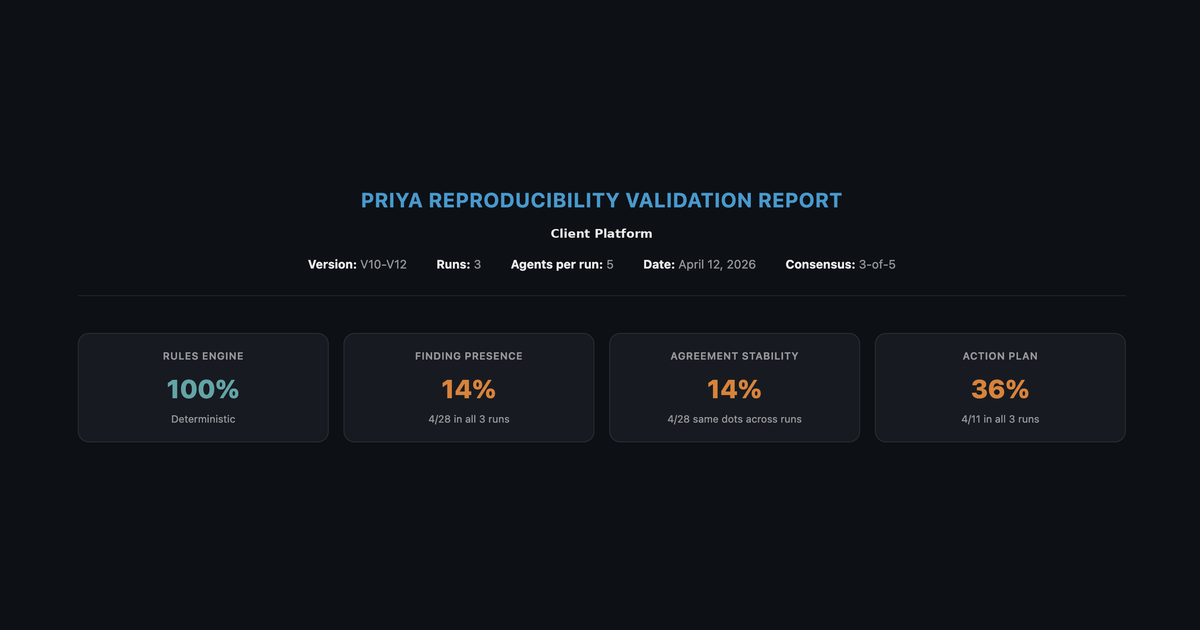
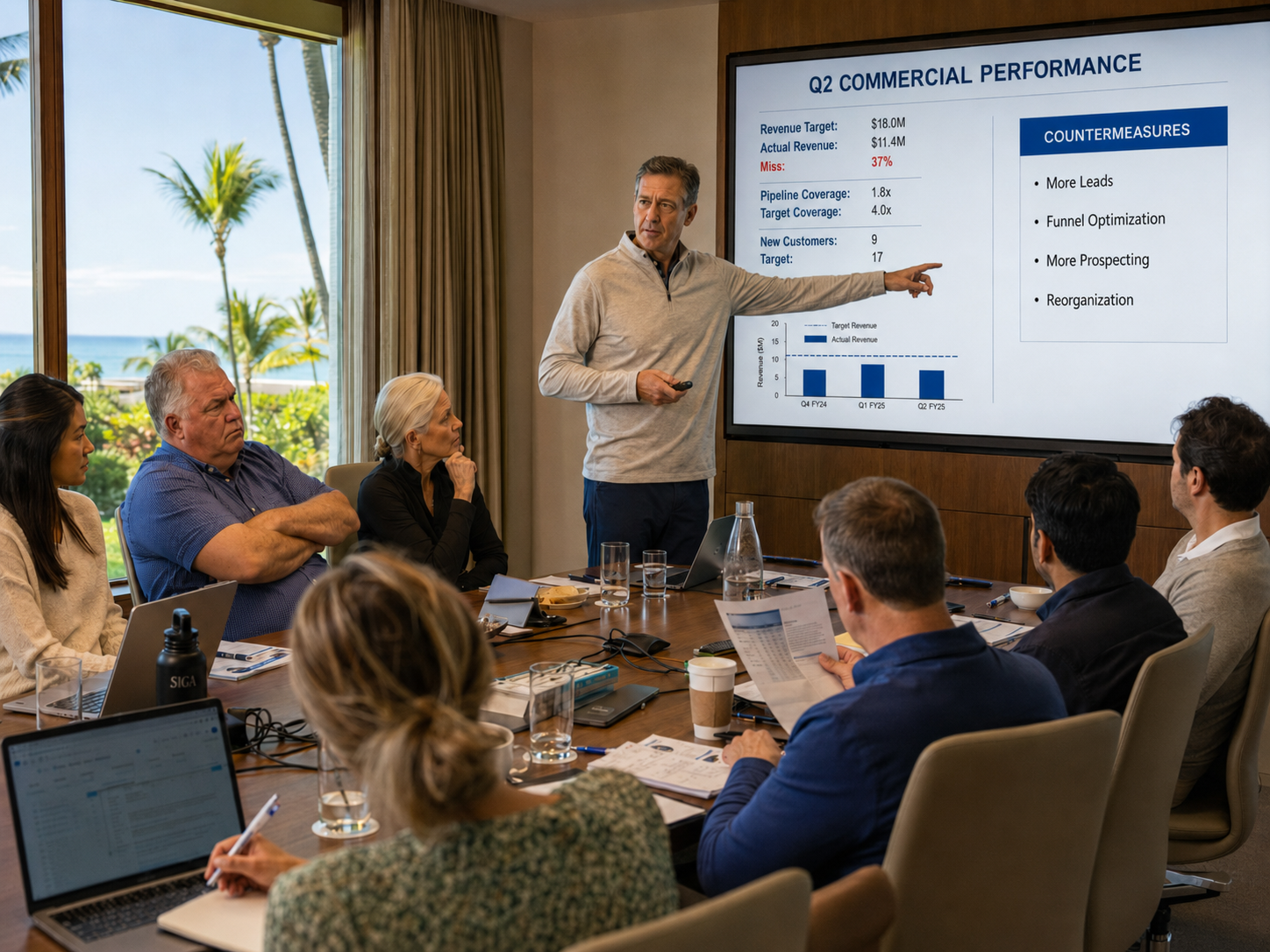
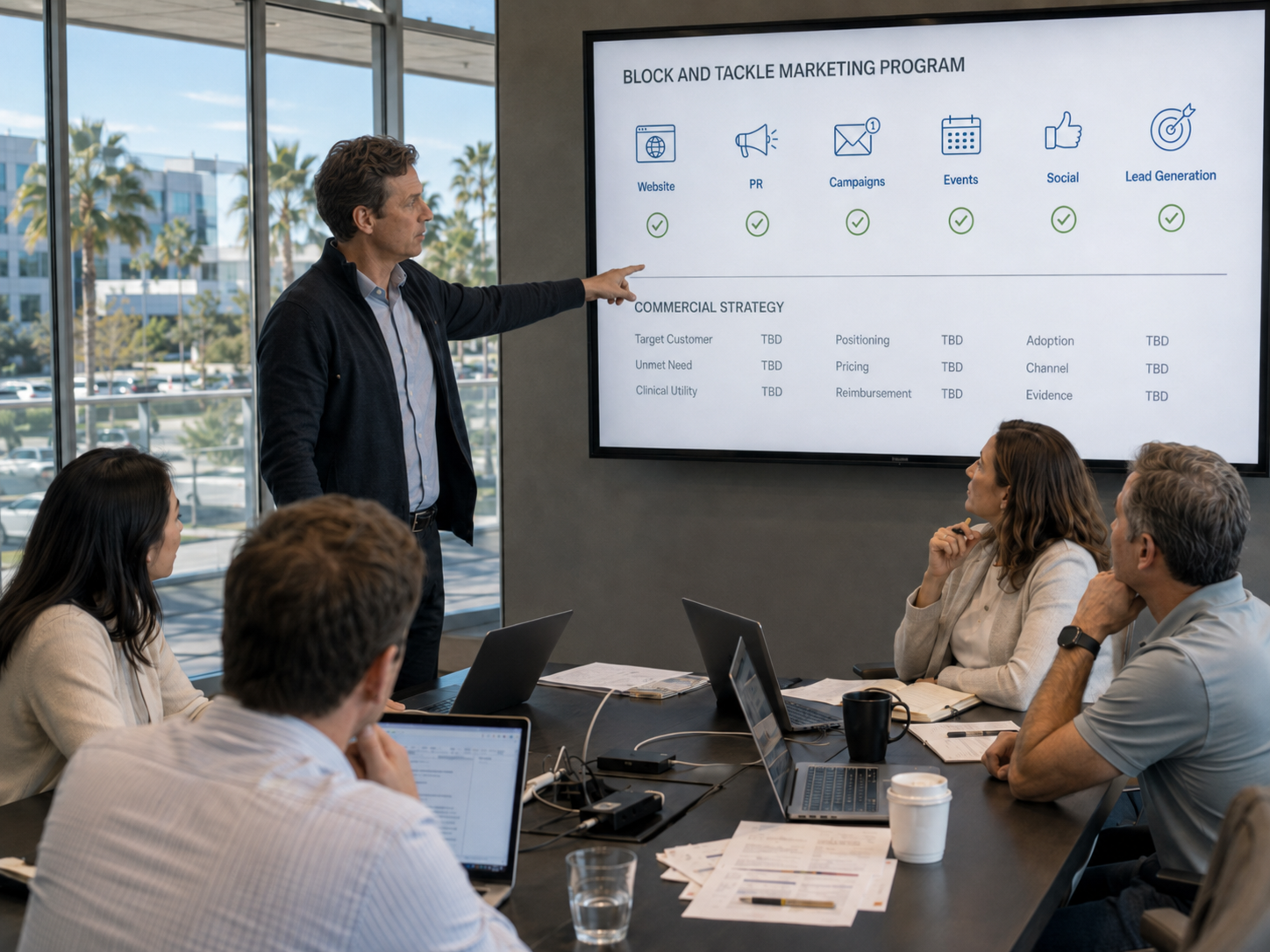
Life science companies hire management consultants for a simple reason: they need expertise they don't have in-house. When you're preparing for a launch, building a commercial organization, or getting ready to raise, you need someone who has done it before. Someone who can assess where you stand, identify the gaps, and tell you what to fix.
The problem isn't why companies hire consultants. It's what they actually get.
The Subjectivity Problem
The uncomfortable reality about traditional consulting: the output is one person's opinion. Might be well-informed, might be experienced, but still subjective. Even firms with structured audits can't escape this. Frameworks designed by people, scoring applied by people. Two consultants from the same firm evaluating the same company will reach different conclusions. In any other high-stakes domain we wouldn't accept that variability. Imagine if a clinical trial produced different results depending on which lab tech ran it. We'd call that a broken assay. But for commercial readiness, we've accepted subjective opinion as the standard.
The Depth Problem
Most consulting firms staff with a senior partner who sells and junior associates who deliver. The person with 25 years scopes the project. The person with 2 years builds the deliverable. This works for strategy frameworks and market sizing. It does not work for evaluating GTM readiness in life sciences where details matter enormously. Does the associate understand how IVD reimbursement pathways shape pricing strategy? Can they evaluate whether your KOL engagement plan will generate clinical adoption? Do they know why channel strategy needs to account for lab purchasing dynamics that differ by segment? That depth comes from decades of doing the work. And that depth is rarely the person building your deliverable.
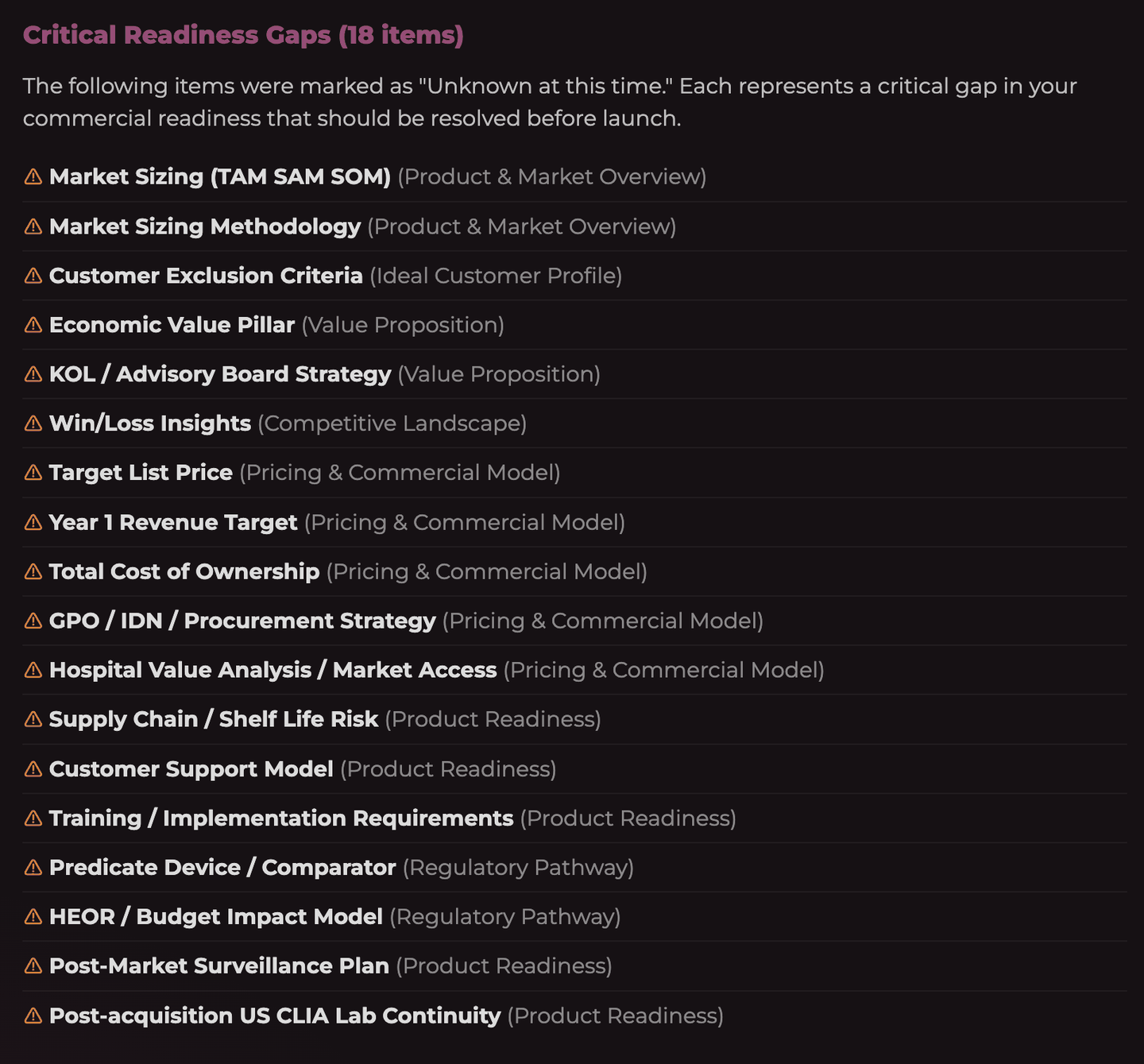
Eighteen unanswered fields, each tied to the section it belongs to. The engine reports what is missing whether or not anyone thought to ask.
The Bias Problem
Some companies skip the firm and hire a former executive as advisor or fractional leader. Solves the depth problem, creates a new one. A former VP of Commercial with 15 years at a large diagnostics company brings tremendous experience. Also brings every bias, preference, and assumption from those 15 years. They'll default to org structures they know, GTM models they've used, vendor relationships they've built. Their advice reflects their career, not necessarily your situation. Not a criticism. Human nature. But when making foundational commercial decisions, you need analysis grounded in your specific circumstances, not filtered through someone else's playbook.
Corporate jargon doesn't provide objective, actionable steps for shoring up your go-to-market gaps.
In both cases, the firm and the former executive, what you're paying for is a slide deck. A set of recommendations that reflects someone's subjective assessment, delivered once, with no mechanism to verify it, reproduce it, or measure progress against it.
The Speed and Cost Problem
Traditional engagements are slow. A comprehensive GTM assessment typically takes 6-12 weeks from kickoff to deliverable. For an early-stage company burning cash and racing toward a raise, that timeline can be the difference between hitting your window and missing it. Also expensive. A meaningful engagement from a recognized firm runs six figures. For growth-stage companies, that's a line item. For early-stage companies that need it most, it's a significant portion of runway. The economics create a perverse incentive: the companies that most need rigorous assessment are least able to afford one.
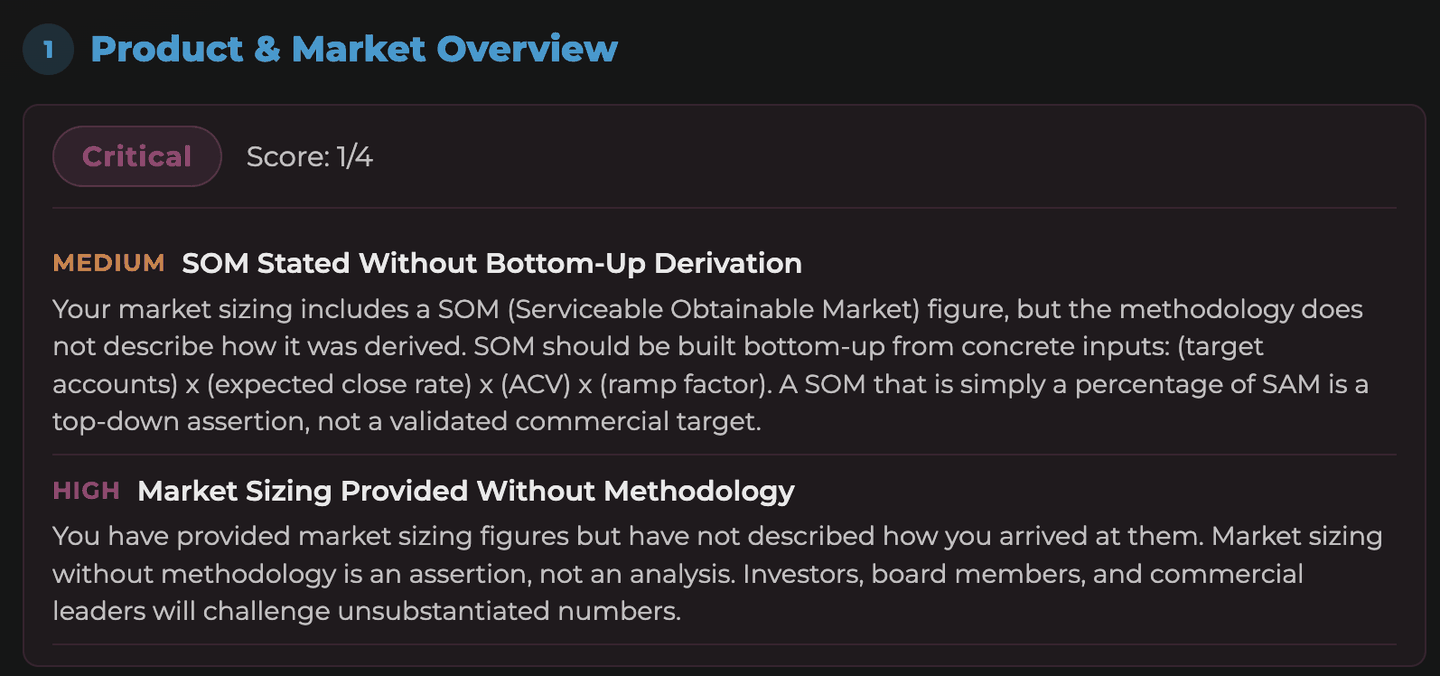
Not a checkbox. Each finding carries the reasoning behind it, and it arrives the same day the intake does rather than eight weeks later.
The "One and Done" Problem
Perhaps the most fundamental limitation: traditional consulting is point-in-time. Engage the firm. They assess. They deliver the deck. You implement. Then what? No mechanism to measure whether you closed the gaps. No way to reassess against the same criteria six months later and quantify progress. No objective baseline to show investors you've materially improved commercial readiness. You're left with a static document that ages the moment it's delivered.
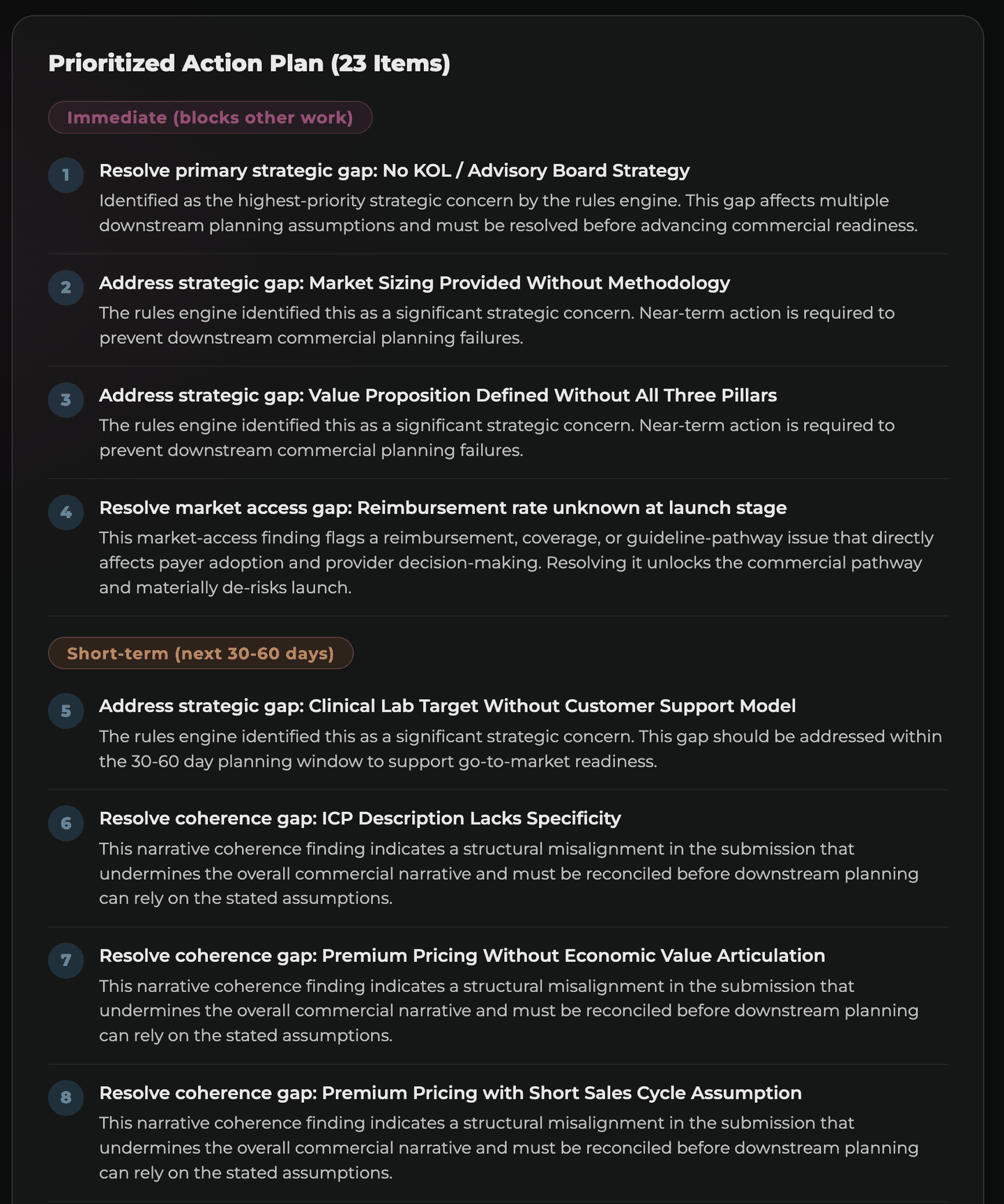
Twenty-three actions, sequenced by what blocks what. Run it again once the work is done and the same inputs produce the same plan, which is what makes progress measurable rather than assertable.
A Different Model: Objective, Reproducible, Continuous
This is why we built our approach differently. Our platforms, MAYA, PRIYA, and GAIA, don't replace human expertise. They systematize it. Decades of hands-on life science commercial leadership encoded into deterministic rules engines and augmented by AI, delivering analysis that is objective, consistent, and reproducible every time.
Where traditional consulting gives you one consultant's opinion, our 225-rule engine (PRIYA) and 310-rule engine (GAIA) evaluate against the same rigorous standards regardless of when or who runs it. Same gaps flagged. Same priorities surface. Same evidence-based recommendations emerge.
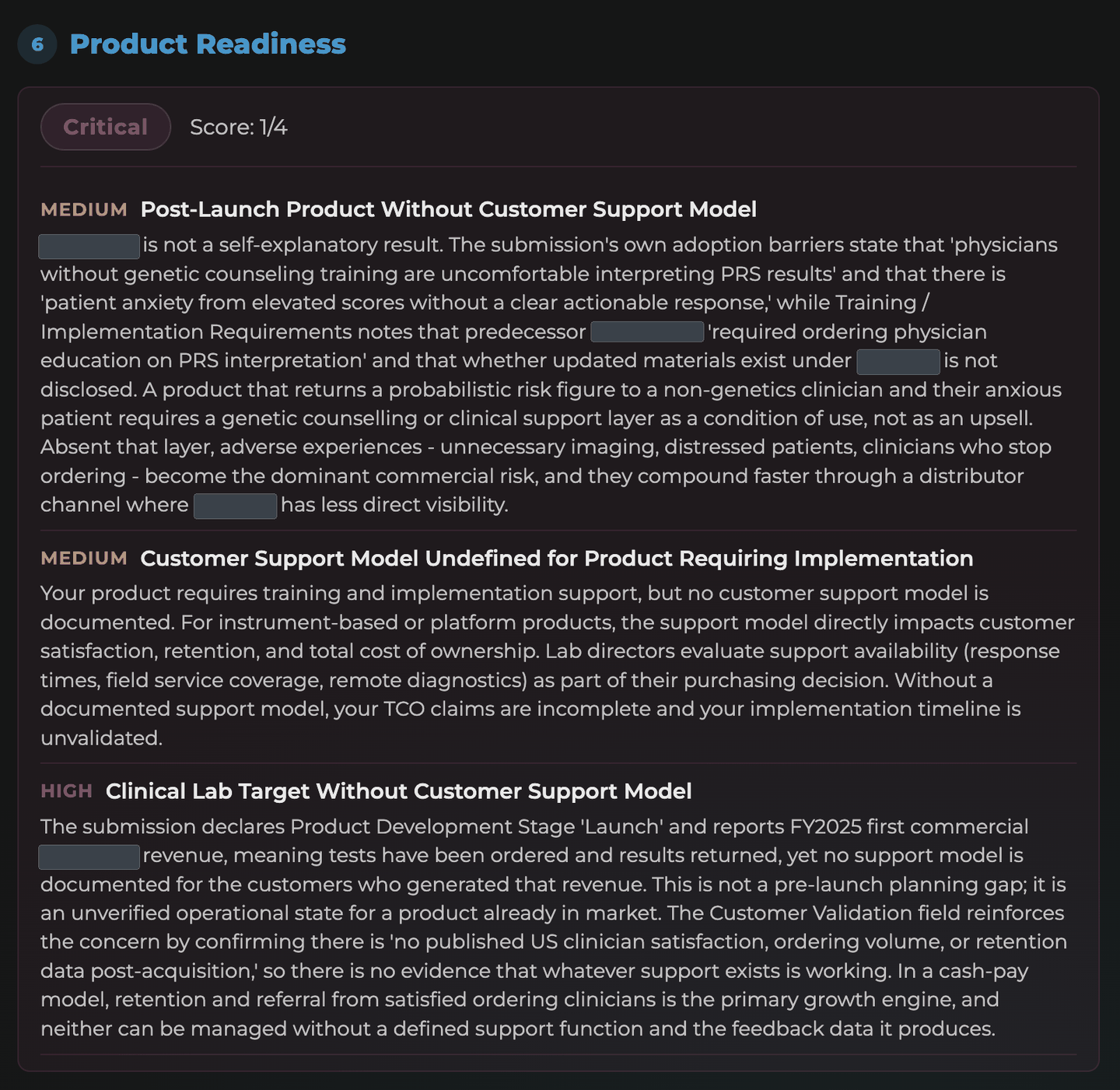
One dimension of thirteen, scored and evidenced. Client identifiers are redacted here; in a live deliverable this is the level of detail behind every gap.
Where traditional consulting takes months and costs six figures, our platforms deliver comprehensive assessment in days at a fraction of the cost.
Where traditional consulting is one and done, our approach gives a repeatable yardstick. Run it before your raise. Run it again after execution. Show investors with data that you've closed gaps and improved commercial readiness. That's not a slide deck. That's a measurement system.
Our approach also brings that deep, earned experience. The difference is that it's now augmented by AI platforms that enforce objectivity, layer deterministic analysis on top of strategic judgment, and eliminate the variability that makes traditional engagements unreliable. You get the decades of commercial leadership without the blind spots that come with any single perspective.
And because our platforms are the diagnostic, not the entire solution, we pair them with seasoned operators who know how to fix what they find. Our platforms pinpoint mission-critical go-to-market gaps. Our seasoned operators fix them so you can raise with confidence and scale with clarity.
The Bottom Line
Traditional consulting isn't broken. It's limited by its own model: subjective, slow, expensive, and static. For companies navigating life science commercialization, those limitations translate directly into risk. The risk that you're acting on biased advice, spending months on an assessment another consultant would have done differently, and having no way to prove progress when it matters most.
There's a better way. And we built it.
Back to Blog